Fort Lauderdale
Florida, United States
The US office, and the one most engagements run out of.
Open in Maps ↗I'm Oshri Cohen. I take the Chief AI Officer seat at mid-market US and Canadian companies, typically $10M–$50M, fractionally, on an interim basis, or full-time. You hire me, not a firm: no bench, no account manager, nobody junior sent in my place. I own the strategy, the governance and the systems, and I build them with your teams.
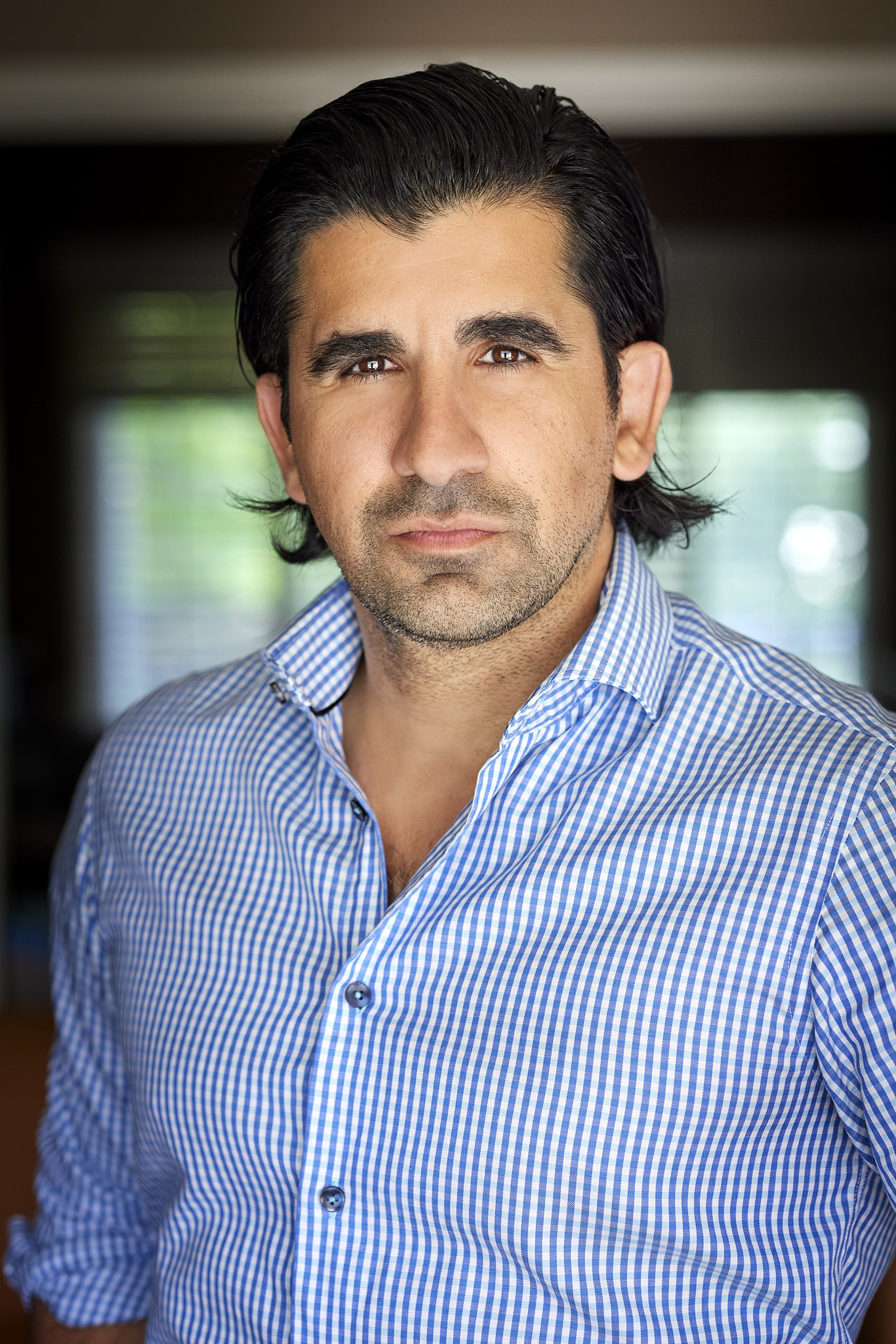
A firm is paid to still be necessary next year. I'm paid to make you independent, as fast as that can honestly be done, and then to stay reachable anyway. This field moves too quickly for anyone to be left holding it alone.
Most technology advice starts with the technology. Mine starts with the business: where you make money, where you lose it, what the board is actually asking. From there it derives the architecture, the team, and the AI. Four movements, one spine, applied the same way every time. The method is the discipline; the solution is always current.
A clear-eyed read on product, team, architecture, security and spend, tied to your numbers. The real root cause, not the loudest symptom, plus where AI creates measurable leverage and where it's a distraction. You leave with a written diagnosis and a sequenced plan you keep, whether or not we continue.
Strategy tied to revenue, an architecture that scales, an AI-native operating model and the org to run it. Build-vs-buy, security and compliance posture, and the hiring plan. Every call derived down from the business.
Hands-on, and across the whole company rather than one department. Purchasing, customer service, marketing, sales, production and logistics get rebuilt around AI, and engineering too where you have engineers. Where you don't, I hire them for you. The part most advisors don't do. I do.
I run the operating model and measure it where the money is: hours recovered in each function, cost per outcome, quality and error rates. I re-run evals as models drift and adopt what's genuinely better. Then I plan the exit: I recruit the team to run it, or train the people you already have, and stay reachable afterwards for the hard questions.
For 25 years I've sat at the seam between the boardroom and the codebase, translating business strategy into engineering execution and engineering reality back into board decisions. That job now has a title. Companies want one executive accountable for AI, and it's the Chief AI Officer seat.
I've delivered 10+ digital products across HealthTech, B2B and B2C e-commerce, event management, transportation and logistics, supply chain and order fulfillment, marketing, manufacturing and finance, hands-on across architecture, CI/CD, UX, and AI. Today the work is AI: strategy, governance, and systems in production, and the range matters more than it sounds. An agent that routes an order and one that drafts a campaign fail in completely different ways, and you only learn that by having shipped both.
Since 2018 I've served as a Fractional & Interim CTO to 30+ companies, almost all of them US-based, at one point simultaneously directing 12 engineering teams across 7 countries. Before that, executive seats as VP of Engineering at an intelligent-transportation company and CTO of a healthcare EMR platform. My obsession is the experience, for users, customers, and the operators who run the business. The client base is North American, mostly American with Canadian companies alongside, and the work runs remotely from Eastern Time. I'm based in Canada myself, which has never been the interesting part.
A sample of the AI work, across the industries I've actually operated in: B2B and B2C commerce, event management, transportation and logistics, supply chain and order fulfillment, marketing, healthcare and EdTech.
Not a tool rollout. Purchasing, customer service, marketing, sales, production and logistics rebuilt around AI, with the governance that makes it safe to run, and engineers hired where a company has none.
In a commodity market the price is fixed, so profit lives in the cost of fulfilling each order. A graph of agents sources every line across owned inventory and drop-ship suppliers, picks the cheapest carrier that still meets the promise, and holds every order above a margin floor.
Search Console and Analytics mined daily, competitors watched continuously, then the content, the social posts and the imagery drafted and scheduled. One marketer directs it and owns what ships, with the throughput of a team.
An enormous public healthcare data collection, gathered and lined up so it can be queried in plain English. Answers that used to mean hiring analysts and waiting weeks now come back on demand.
Achieved SOC 2 Type I & II across HealthTech, InsureTech and E-commerce while leading offshore teams under HIPAA protocols.
Thirty engineering teams at thirty different companies, across seven countries and four time zones. Inherited codebases with no tests, no docs and no team, rebuilt engineering and led product until delivery was predictable again.
AI applications and agent systems I've designed across industries, some shipped, some blueprints. A sample is below; explore the full set on the dedicated page.
A traceable graph of narrow AI specialists that reads the data, computes against the rules, and drafts the filings, with the accountant accountable at the end.
In a commodity market the price is fixed, so a graph of agents finds profit in the cost of each order, sourcing, shipping and returns, while holding a margin floor.
The Chief AI Officer seat, sized to what you actually need, plus the CTO work that has always sat underneath it. Whatever shape it takes, the person you meet is the person who does the work.
The CAIO seat a day or two a week. I own AI strategy, governance and delivery, and I build the systems myself. My flagship.
The seat filled now, full-time and temporary, when AI is stalled or your CAIO just left and the board wants an answer.
The permanent seat. I take it for a defined stretch and build the operating model, then hire and hand over to the CAIO who keeps it.
An AI inventory, shadow AI brought into the light, and a governance layer mapped to NIST AI RMF, ISO 42001 and the EU AI Act.
Automation across purchasing, service, marketing, sales, production and logistics, not a tool bolted onto the old process. I implement it, hiring included.
Senior technology leadership without a full-time hire. I set direction, build the team, and own delivery.
Full-time leadership in the seat, temporarily, to cover a gap or carry a transition until the permanent hire lands.
Stabilize troubled products and teams, then chart a credible path back to fast, predictable delivery.
For PE and investors: a clear read on code, architecture, team and risk before you sign, and an AI value-creation plan after.
I recruit your engineering team the way a CTO builds his own: org design first, every candidate vetted personally, hires built for the AI era.
High-performing teams via DORA, GitOps and DevOps: measurable, predictable, sustainable delivery.
Temporary CTO, short-term CTO, portfolio turnaround CTO, AI strategy and the rest of the catalogue.
Conversations on the CTO craft, from the right leader at each stage of a company, to security, compliance, AI-native engineering and the road to fractional leadership.
Field notes on engineering leadership, metrics, and building technology businesses.
Fort Lauderdale for the US market and Montreal for Canada. Both run on Eastern Time.
Florida, United States
The US office, and the one most engagements run out of.
Open in Maps ↗Quebec, Canada
The Canadian office, and where the practice started in 2018.
Open in Maps ↗Same hours in both, which is the practical reason the coverage works: a client on the East Coast and one on the West get the same working day, and nothing waits overnight for a hand-off between offices. The work runs remotely by default. I travel for the moments that genuinely need a room.