Fort Lauderdale
Florida, United States
The US office, and the one most engagements run out of.
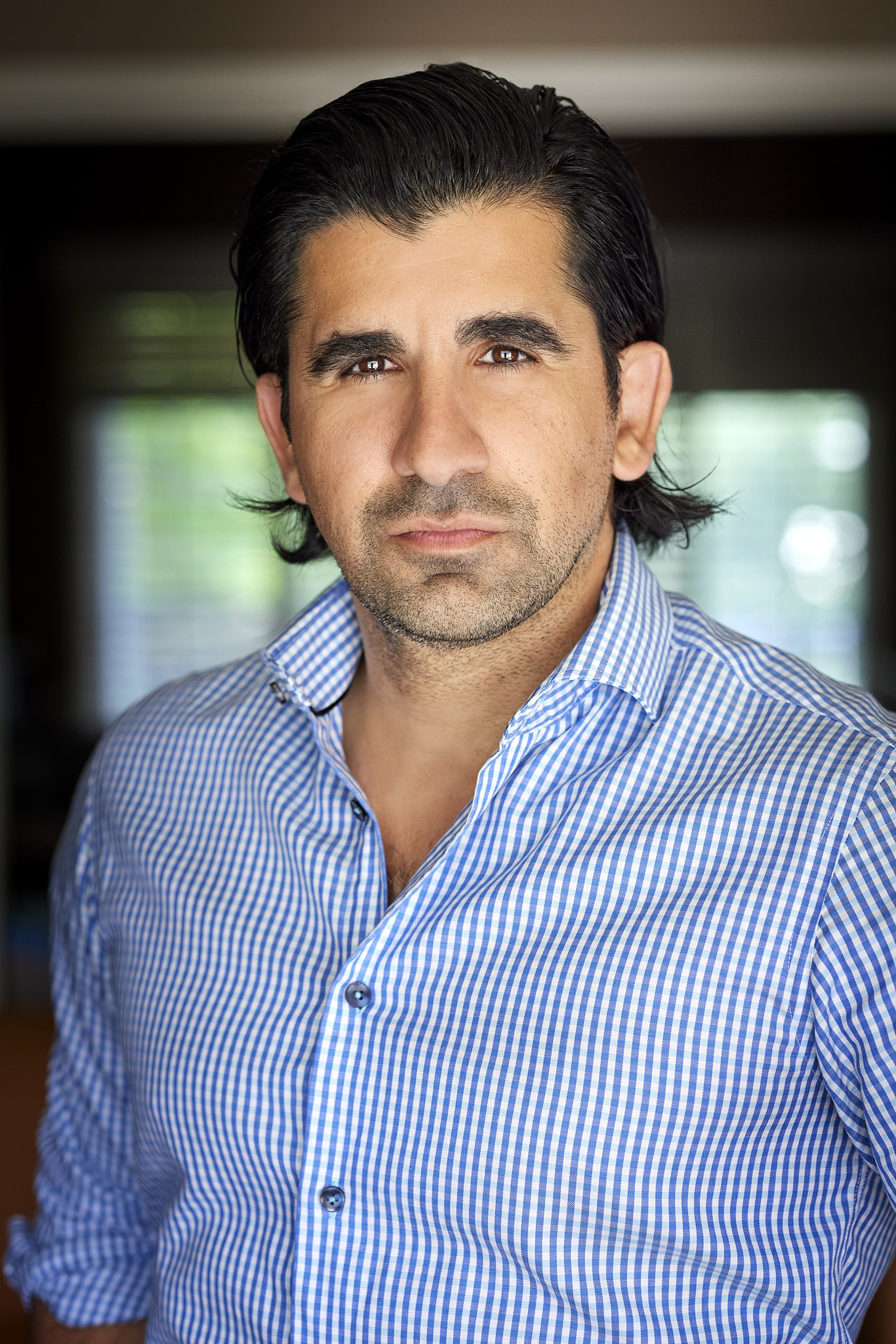
Open in Maps ↗I'm Oshri Cohen. I take the Chief AI Officer seat at mid-market US and Canadian companies, typically $10M–$50M, fractionally, on an interim basis, or full-time, and I still work as a fractional and interim CTO where that's the sharper fit. There is no firm behind me and there never has been. You get me, working with the teams already in the building, until the problem is solved.
Not years on a résumé. Companies served, AI shipped, products delivered.
Fluent in the cap table and the Kubernetes manifest, and able to turn each into the other.
I've spent twenty-five years working the seam between the boardroom and the codebase. Most of what I do there is translation: turning business strategy into engineering that ships, then turning engineering reality back into something a board can actually decide on. Lately the request keeps arriving in the same shape. A company has spent real money on AI, nobody can say what it returned, and there is no single executive whose name is on the answer. That seat now has a title, Chief AI Officer, and I fill it: the strategy, the governance, the portfolio, and the systems that carry it.
Along the way I've shipped more than ten digital products in HealthTech, e-commerce, manufacturing, logistics and finance, usually with my hands on the architecture, the pipeline, the UX and now the AI. Since 2018 I've done it as a fractional and interim CTO, for north of thirty companies, nearly all of them in the US. At the busiest stretch I was directing twelve engineering teams scattered across seven countries. Before the consulting years I sat in the full-time chairs too: VP of Engineering at an intelligent-transportation company, then CTO of a healthcare EMR platform.
The thread through all of it isn't a favorite technology. It's the order I make decisions in. I start from the product and the business and let the architecture, the team and the tooling fall out of that, rather than picking a stack first and hoping the business catches up. I've turned that habit into a method I can repeat, but the method only earns its keep because I build. I write code, I hire, I run the team. I don't hand over a deck and disappear. And the thing I keep coming back to is whether the work actually holds up for the people using it: customers, sure, but also the operators quietly keeping the business on its feet.
I work with companies across the US, remotely, on Eastern Time. My own path ran in the less common direction. I studied business at McGill and learned to code afterward, and that order turned out to be the whole advantage: I can read a cap table and a pull request in the same afternoon and keep both straight.
Also known as: Chief AI Officer · CAIO · fractional CAIO · interim CAIO · AI-native CTO · fractional CTO · interim CTO · Chief Product & Technology Officer · CPTO.
I think from the product and the business first, then rebuild how the company operates so AI is the default. An AI-native transformation, not a feature bolted on, always in service of the business and the P&L.
The shapes differ, but the situation usually rhymes: the technology is either in trouble or in transition, and somebody has to own it.
One executive accountable for AI across the business: the strategy tied to the P&L, the governance and risk posture, the portfolio of use cases, and the production systems. Fractional, interim or full-time, and I build rather than supervise.
Fractional Chief AI OfficerAn auditable inventory of every AI system, shadow AI brought into the light, and one control set mapped to NIST AI RMF, ISO/IEC 42001 and the EU AI Act, wired into the delivery pipeline instead of filed as policy.
AI Governance & RiskRebuilding how the product is built and how the org runs so AI is the default. Production AI in the product and the pipeline, an AI-first SDLC, and the team to carry it, measured against the P&L rather than against demos.
AI-Native LeaderThe senior technology seat, part-time or in the gap. Strategy, architecture, hiring and delivery owned end-to-end, sized to what the company actually needs and built to hand off to a permanent leader.
Fractional CTOA credible technical read before a private-equity deal closes, and an AI-native value-creation plan after. Architecture, team, security, spend and AI leverage, assessed against the thesis the investment rests on.
Technical due diligenceTroubled products made predictable. I find the real root cause, not the loudest symptom, then stabilize delivery, rebuild trust with the board, and drive the team toward elite DORA performance.
Turnaround CTOModernizing systems that have outgrown their architecture — and traditional organizations making their first serious software or AI bet, where there's no legacy stack to fight and the operating model can be designed AI-native from the start.
Security and compliance built into the work, not bolted on after. SOC 2 Type I and II, ISO 27001, HIPAA, GDPR, CCPA and PCI DSS posture set up so it survives an audit and a scale-up, with the AI layer that now sits on top of all of it: ISO/IEC 42001, the NIST AI RMF, the EU AI Act and OWASP's LLM Top 10. Security in every pull request, and sector rules like HITRUST, FERPA or COPPA where they apply.
The distinction that defines the work: strategy is the easy half. The build is the point.
Executive seats, a founding team, and seven years as a fractional CTO. Where the experience comes from.
The engagements change shape. These don't.
Every technical decision starts at the P&L — revenue, margin, risk — and is reasoned down to the stack, never the other way around.
No bench, no junior consultant assigned after the sale. I build, ship and hire inside the engagement, alongside the people you already employ.
AI is evaluated at every turn as a lever and measured against the business, not adopted because it's the trend.
DORA for delivery, cost and quality for AI systems. Progress stays legible to the board, not a matter of faith.
I read a cap table and a Kubernetes manifest in the same afternoon, and translate each into the other.
Every engagement is scoped to end. The practice is installed inside your organization and documented as it goes, so it belongs to you rather than to me. Then my phone stays on for the hard ones.
Fort Lauderdale for the US market and Montreal for Canada, both on Eastern Time.
Florida, United States
The US office, and the one most engagements run out of.
Open in Maps ↗Quebec, Canada
The Canadian office, and where the practice started in 2018.
Open in Maps ↗Both offices keep the same hours, which is the practical reason the coverage works: an East Coast client and a West Coast one get the same working day, and nothing waits overnight for a hand-off between them. Engagements run remotely by default, and I travel for the moments that genuinely need a room.
The things founders, CEOs and investors ask before we start.
Oshri Cohen is a Chief AI Officer (CAIO) who works fractionally, on an interim basis, or full-time. He has 25 years in software and 20 in technology leadership, and since 2018 has served 30+ companies as a fractional and interim CTO, almost all of them US-based. As a CAIO he owns the entire AI agenda: strategy tied to the P&L, the governance and risk posture, the portfolio of use cases, and the production systems themselves. He also leads technical due diligence for private-equity deals, turns around troubled software, and modernizes legacy systems. He works hands-on, from the inside out, and serves companies across the United States and Canada remotely on Eastern Time.
A Chief AI Officer is the senior executive accountable for the whole AI agenda: AI strategy and where the investment goes, governance and risk, the portfolio of use cases, the AI-capable team, and reporting to the board on what it returned. The role exists because AI decisions cross every department, which makes them nobody's job by default. Oshri runs the seat hands-on, architecting and shipping the systems rather than handing the build to someone else.
Primarily $10M–$50M software and software-enabled companies in the United States and Canada, past product-market fit, where a technology decision now moves the valuation rather than just the backlog — founders, CEOs and boards, plus private-equity investors who need a technical read before a deal and a value-creation plan after. He also works with traditional organizations making their first serious software or AI bet, where the operating model can be designed AI-native from the start.
Fractional means the seat part-time and ongoing, typically a day or two a week alongside your existing leadership. Interim means full-time and temporary, in the seat every day until the situation is resolved or a permanent hire lands. Full-time means taking the permanent role for a defined stretch and then handing over to the successor he helps recruit. In every case the work is sized to what the company actually needs and built to hand off, never a permanent dependency.
No. Oshri works directly with his clients as an individual: no bench of consultants, no account manager, and nobody junior assigned after the sale. The person a company assesses is the person in its leadership meetings and its pull requests every week. Where a real capability gap exists he hires into the client's own organization rather than staffing it externally, so the capability stays with the company. The trade-off is capacity, since one person can only hold a small number of engagements at a time.
The United States is his primary market and Canada the second. He is based in Canada himself and runs every engagement remotely on Eastern Time, distributed by default, which is also how he has directed as many as 12 engineering teams across 7 countries at once.
Both, and those are the only two markets he sells into. Most of the work is American, with Canada the second market. Nothing about the engagement changes at the border, from the published USD rate to the Eastern Time working day. He is based in Canada and has spent most of the last decade serving US clients, so both are familiar ground.
A McGill University business graduate (BA, Business Administration, 2006) who learned to code — the wrong-way-round path that lets him translate between the boardroom and the codebase. He has held executive seats as VP of Engineering at an intelligent-transportation company and CTO of a healthcare EMR platform, was on the founding team of a no-code automation startup, and has run engineering at a 350+ person firm. Since 2018 he has worked as a fractional and interim CTO.
With the client able to run it themselves. Once the strategy is set and the process is running, the work turns to making the client self-sufficient. Where the capability needs people they do not have, he recruits them and interviews every candidate personally. Where the people are already in place, he trains them until the routine calls stop coming. He then steps back but stays reachable for the genuinely hard ones. This applies to every non-full-time engagement: fractional, interim, temporary and short-term alike.
Through The Business-Down Method: a repeatable, four-movement approach — Read, Direct, Build, Operate & Optimize — where every technical decision is derived down from the P&L. The discipline is fixed; the solution is built with today's state of the art and bespoke to your numbers every time.
Email hello@oshricohen.me or call (514) 777-3883. The lowest-risk way to start is a focused Read — a diagnosis of system, org, spend and AI leverage that ends in a sequenced plan you keep whether or not we continue.
If the technology and the business are tangled together and someone has to untangle them on purpose, that's the work I'm built for. The fastest way to find out if I can help is a focused Read — yours to keep either way.